
workflows · 01
Story or fire? A 3-minute triage loop for any ticker that hits your feed
Friday, August 28th, 2026. Nvidia closed at 217.86, down 4.4% on 195 million shares — two days after reporting numbers the wire would describe as net income more than doubling. Record earnings, red stock. Your group chat has opinions. Your feed has headlines written hours after the move. And somewhere in you is the only question that matters: is this a story, or a fire?
Picture answering that the way most people research: eleven browser tabs. The investor-relations page, a chart site, a filings site, two news tabs, whatever WhaleWisdom shows without a subscription. Forty minutes later the tabs disagree about what moment in time it is, and you still don't know enough to act.
Now run the same Friday through the loop this guide teaches — seven commands in Godel Terminal, about three minutes, every window looking at the same company at the same moment. This is the workflow that made me stop using everything else, and I'll walk it exactly as that afternoon sat on my screen. (The terminal has a free tier; a full seat is $118 a month; there's a box at the end mapping every window to a free-tool equivalent that takes about twelve minutes instead of three.)
The mechanics, once: backtick focuses the command line, the pattern is
TICKER EQ COMMAND, and Enter runs the highlighted row — glance before you commit.
Three minutes, seven windows, one Friday
NVDA EQ DES. Skip the company's description of itself and read the
segment revenue table — filed and audited, the closest thing to ground truth
about what a company is. Ten seconds establishes there's no mystery about
what this business sells or which piece grows. On an unfamiliar name, if you
can't finish that sentence from the segments, the first kill rule below ends
the whole exercise at window one.
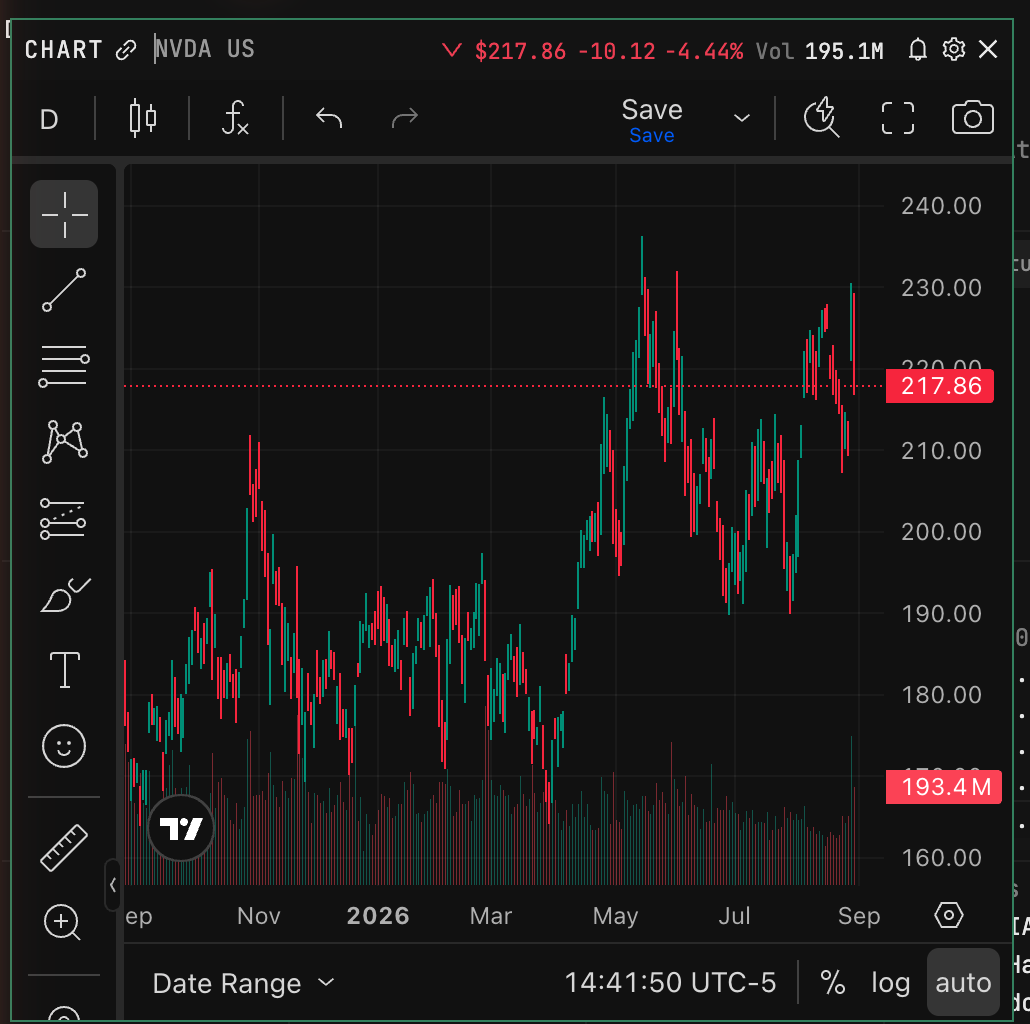
NVDA EQ G. One year of daily candles, and one question: is Friday an
outlier or a continuation? The shape of the year frames everything the next
five windows say.
NVDA EQ FA. The statements. Revenue trajectory, gross-margin direction,
and whether cash flow agrees with earnings — and here the Friday gets its
first real evidence. The margin rows show a business that wobbled to 60.5%
gross margin in early fiscal 2026 and worked back to 75% within three
quarters:
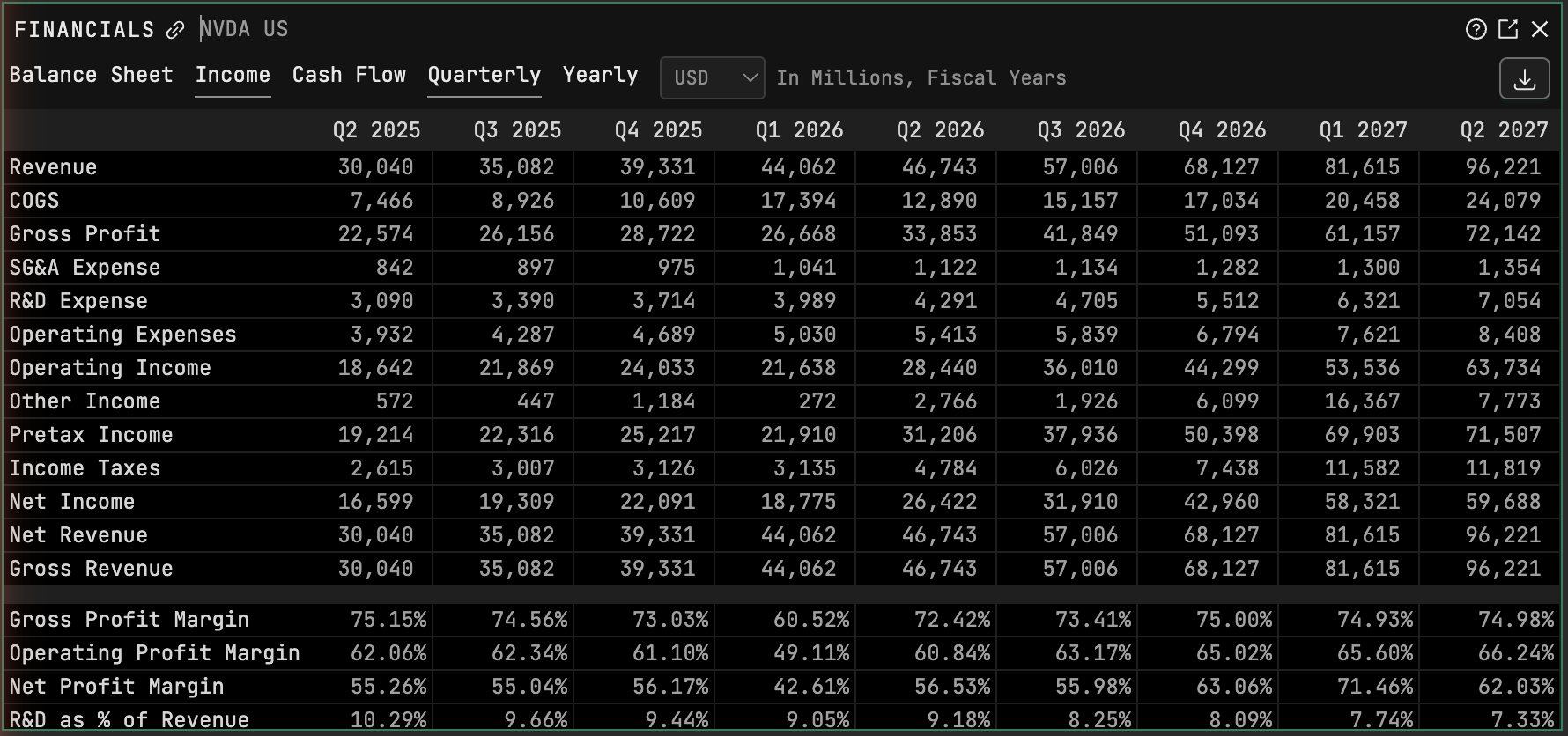
When cash flow and earnings disagree for a couple of quarters, the name earns a longer sitting than three minutes — that disagreement is where real stories hide. Here they agreed. Strike one against "fire."
NVDA EQ HDS. Who owns it, and what they did last quarter. On a triage
pass you read one column — the change — and on this Friday the change column
was doing anything but fleeing:
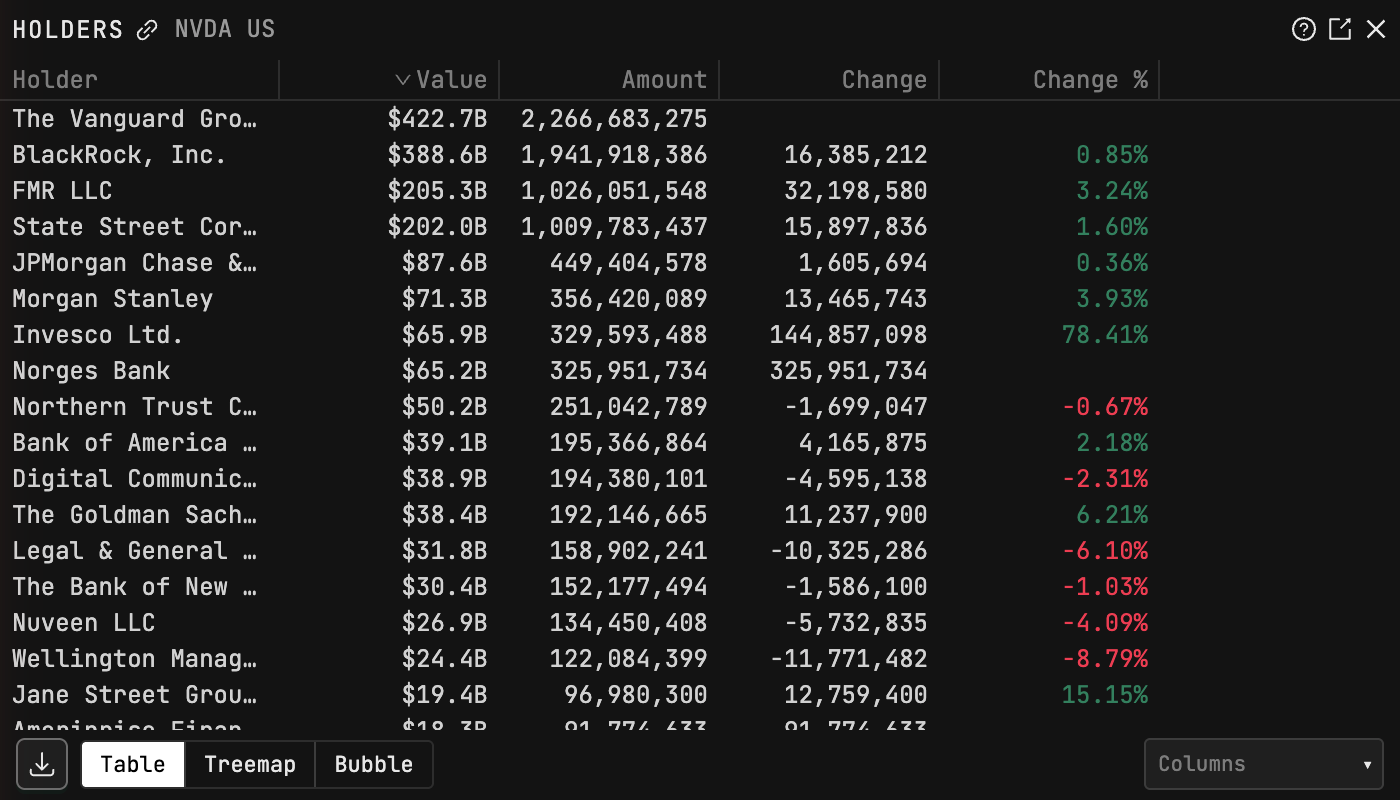
A stock that specialist money added to in size while the price fell is a different animal from one the funds are leaving. You now know which Friday this is, and the group chat doesn't.
NVDA EQ N. The wire, scoped to the name. Three scans: anything from the
company, anything with a number in the headline — and there it is, net income
more than doubling to $59.7 billion — and anything the stock didn't react
to. A stock that falls on doubled income isn't reacting to income. It's
reacting to expectations, which the last window prices.
NVDA EQ CF. Ten seconds for an 8-K the wire hasn't digested. Nothing
lurking.
NVDA EQ OMON. The options chain — the window where the crowd's opinions
come with numbers attached. IV in the mid-twenties, volume stacked at the
strikes just overhead:
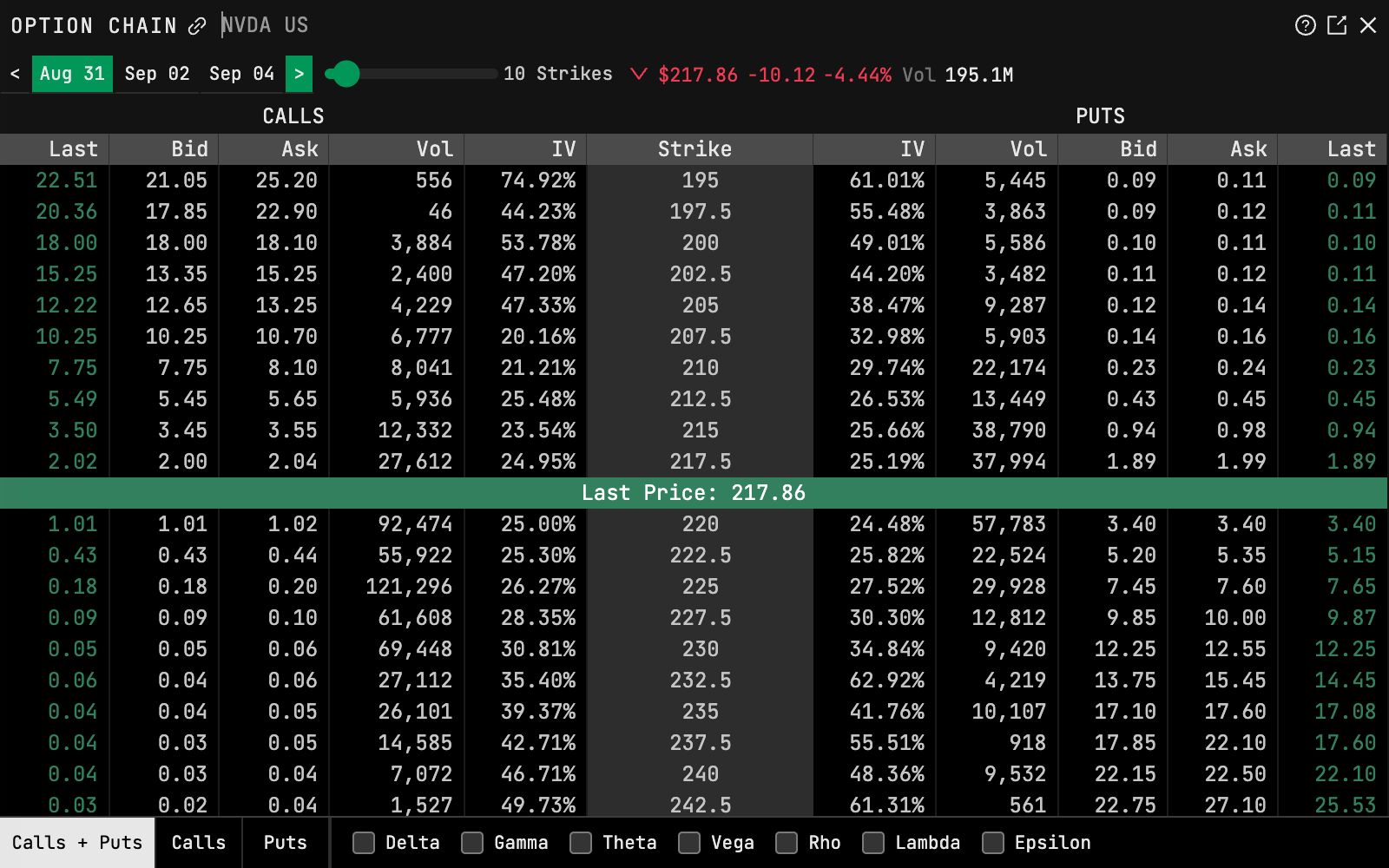
Verdict, elapsed time about three minutes: margins recovering, cash flow agreeing, institutions adding, income doubled, the chain positioned rather than panicked. That Friday read as a story — a market repricing its own expectations — not a fire in the business. Whatever a person does with that, they're deciding with the picture while the eleven-tab crowd is still assembling theirs. That gap is the product.
The kill rules
The three-minute budget works because you're allowed to quit early, and most names deserve it:
- The one-sentence test fails. The segments can't tell you what the company sells. Stop at window one; weekend list.
- The catalyst is a promotion. The move traces to a newsletter-tier source, nothing from the company, ordinary volume. Stop at window five.
- The "discovery" is already priced. The pitch says huge move coming; the chain already prices a huge move. The market got there first.
One upgrade rule going the other way: segments changing shape, or cash flow and earnings disagreeing for two quarters, buys the name a real sitting with the 10-K.
When it's down 12% right now
Reverse the order — the question becomes "what broke, and does the broken
thing matter?" N first for the cause headline and its timestamp. G twice,
the name and a peer beside it, because a sector-wide drop is a different
diagnosis than a company story. Then DES and FA for the decider: does the
damage land on the reason you'd own the thing? Bad news in the growing
segment is a fire; bad news in a 6%-of-revenue segment while the whole ticker
sells off is usually a story — usually, because a three-minute read gets this
wrong sometimes, and knowing that is part of the skill.
Once the loop feels natural, park it: DES left, chart and wire right, linked with the chain icon, saved as its own tab. After that the whole wall follows one ticker change.
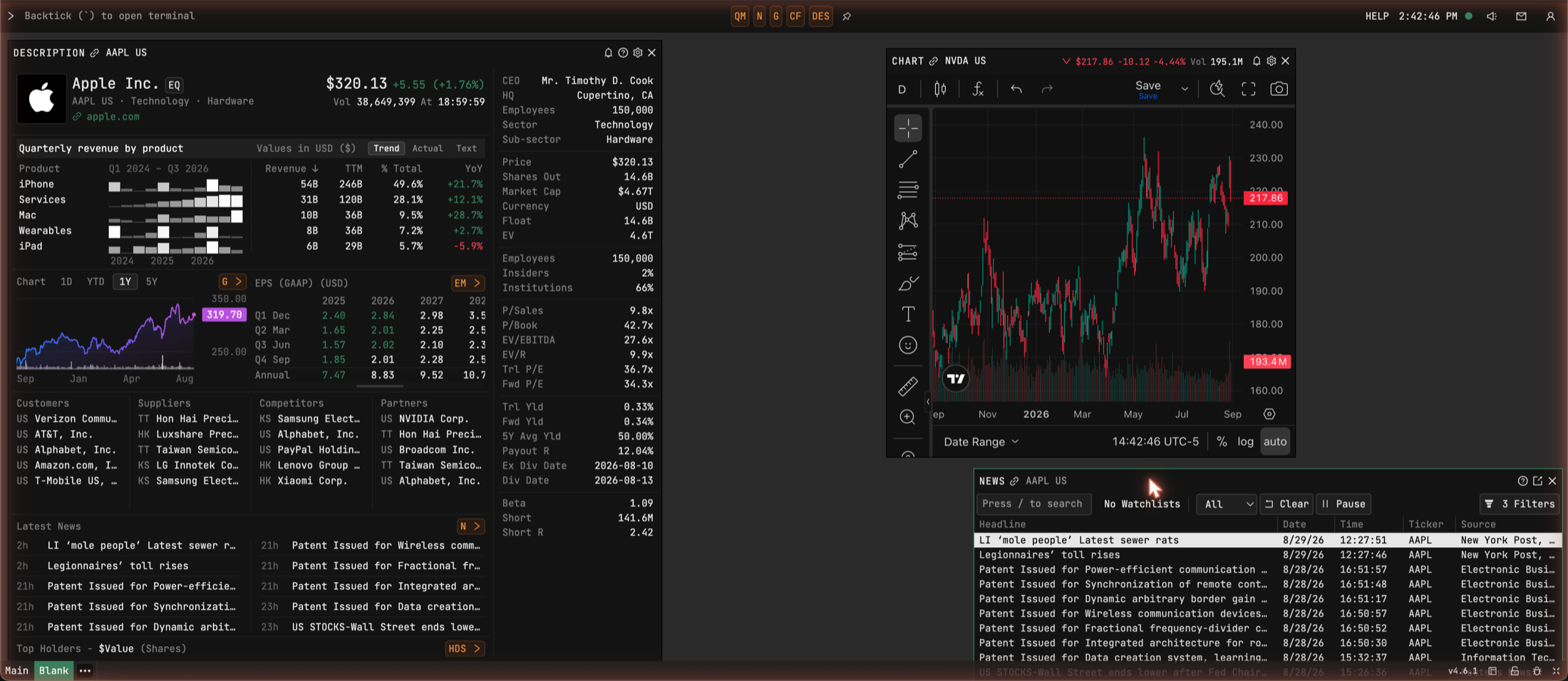
The 12-minute version, without us
The same loop runs on the free stack — six sites instead of one screen, none agreeing on what moment it is: IR page and Yahoo profile for DES, TradingView free for G, the 10-Q on EDGAR for FA, WhaleWisdom for HDS, Yahoo news for N, EDGAR again for CF, your broker's chain for OMON. The reading order and the kill rules work the same. Time both versions once; the difference is what the terminal is for.
Next: names have to reach you before you can triage them — the watchlist wall is how they do.
Tickers on this page are teaching examples, not recommendations. TickerFluent publishes education, not investment advice.